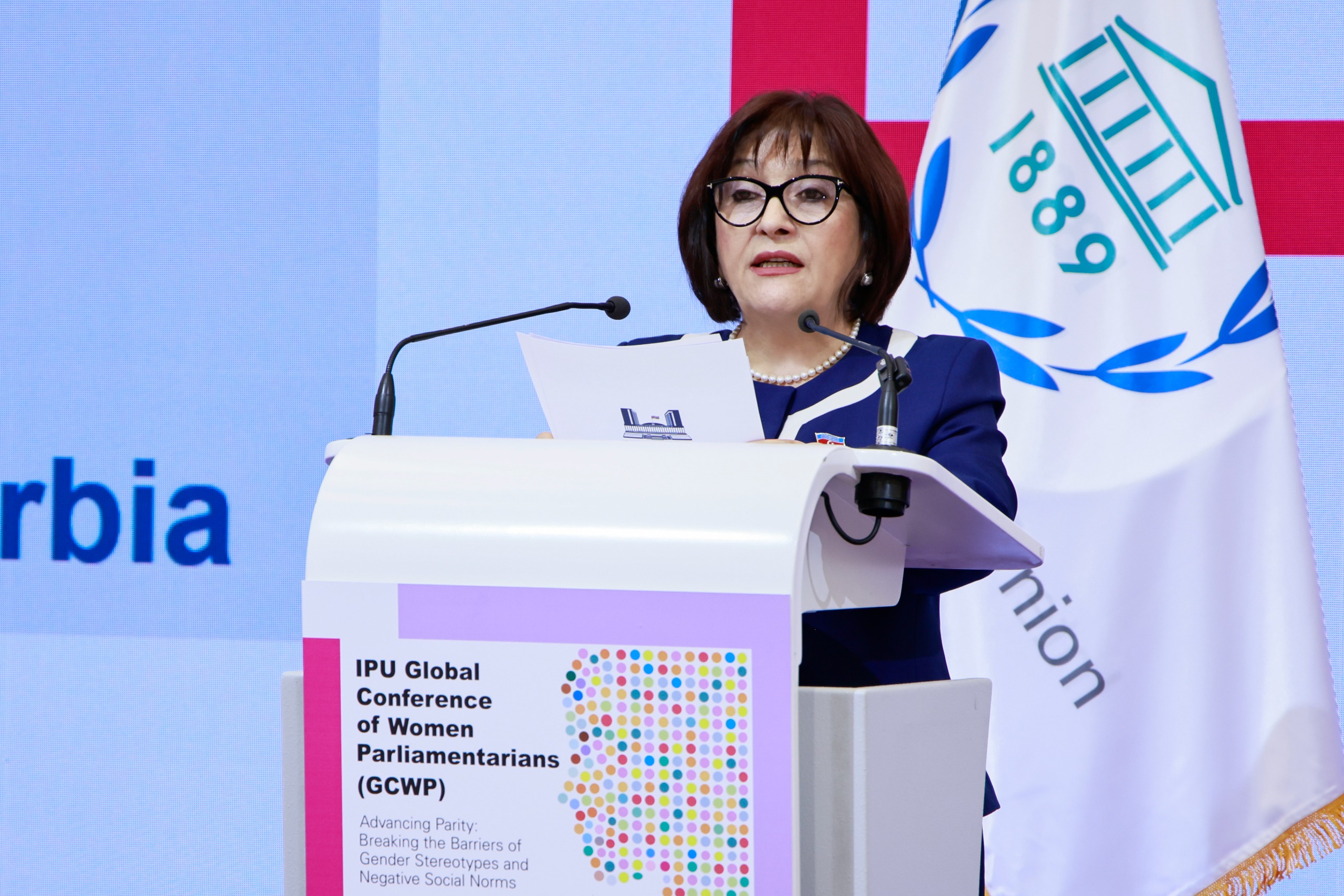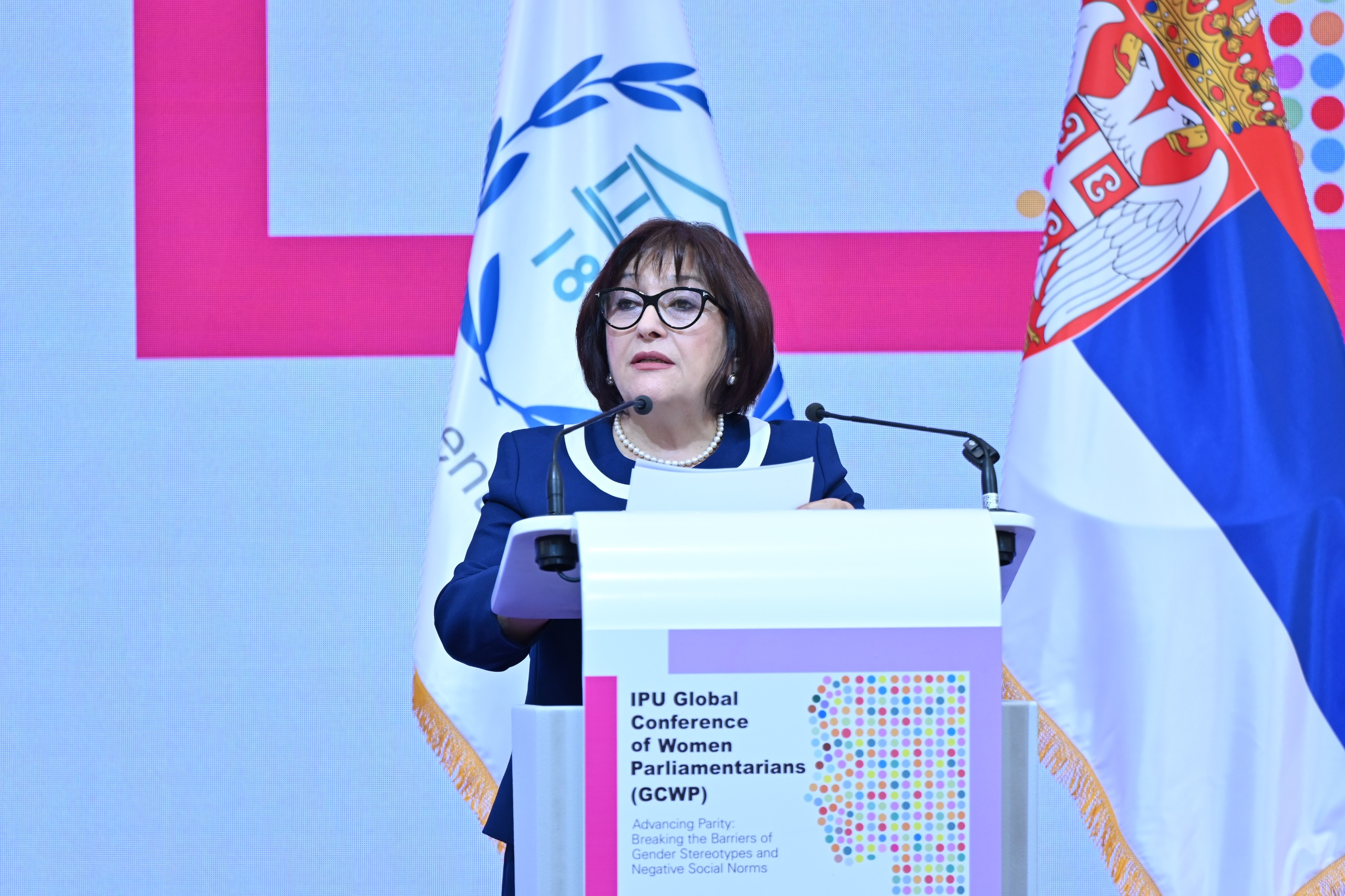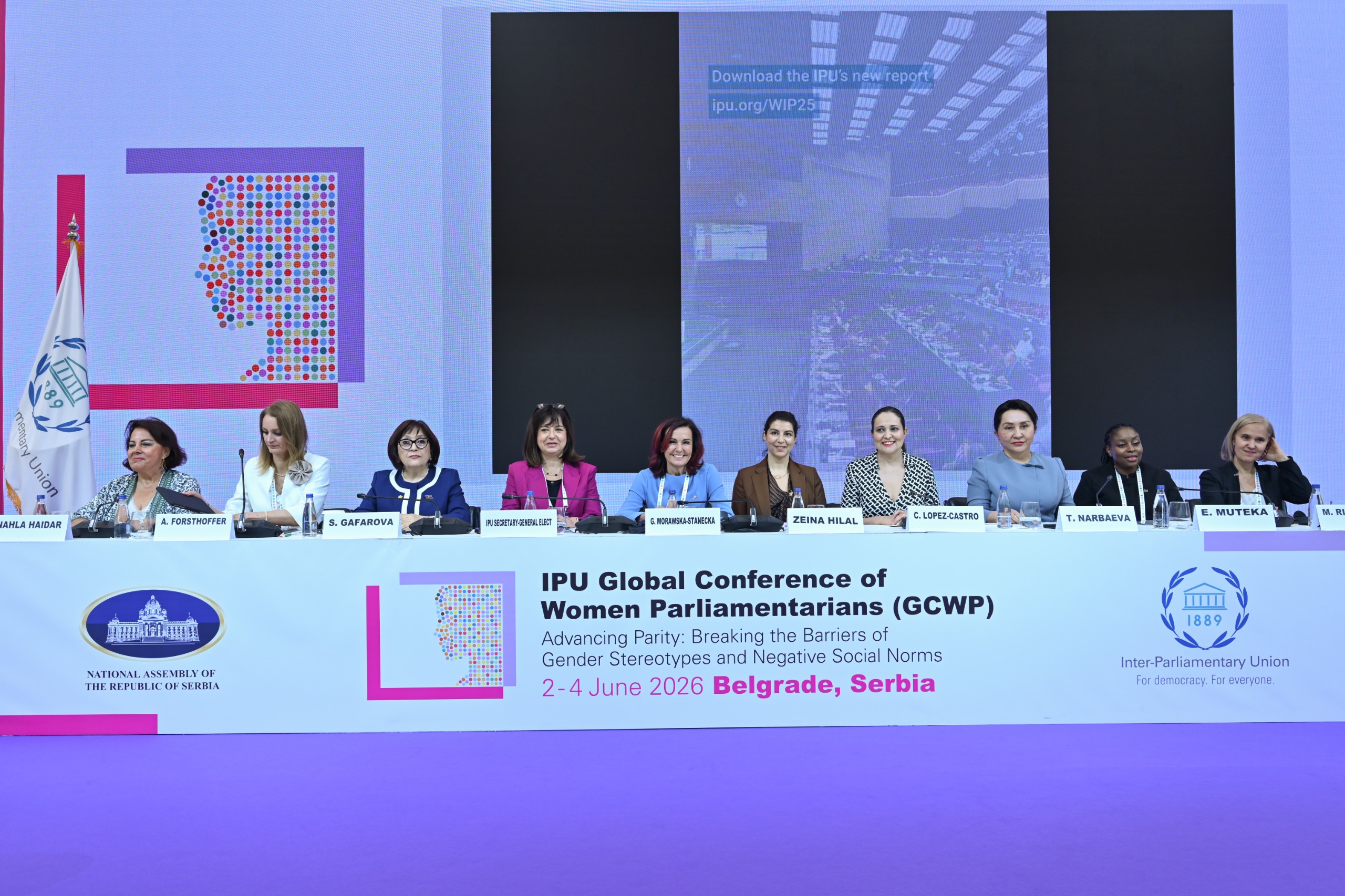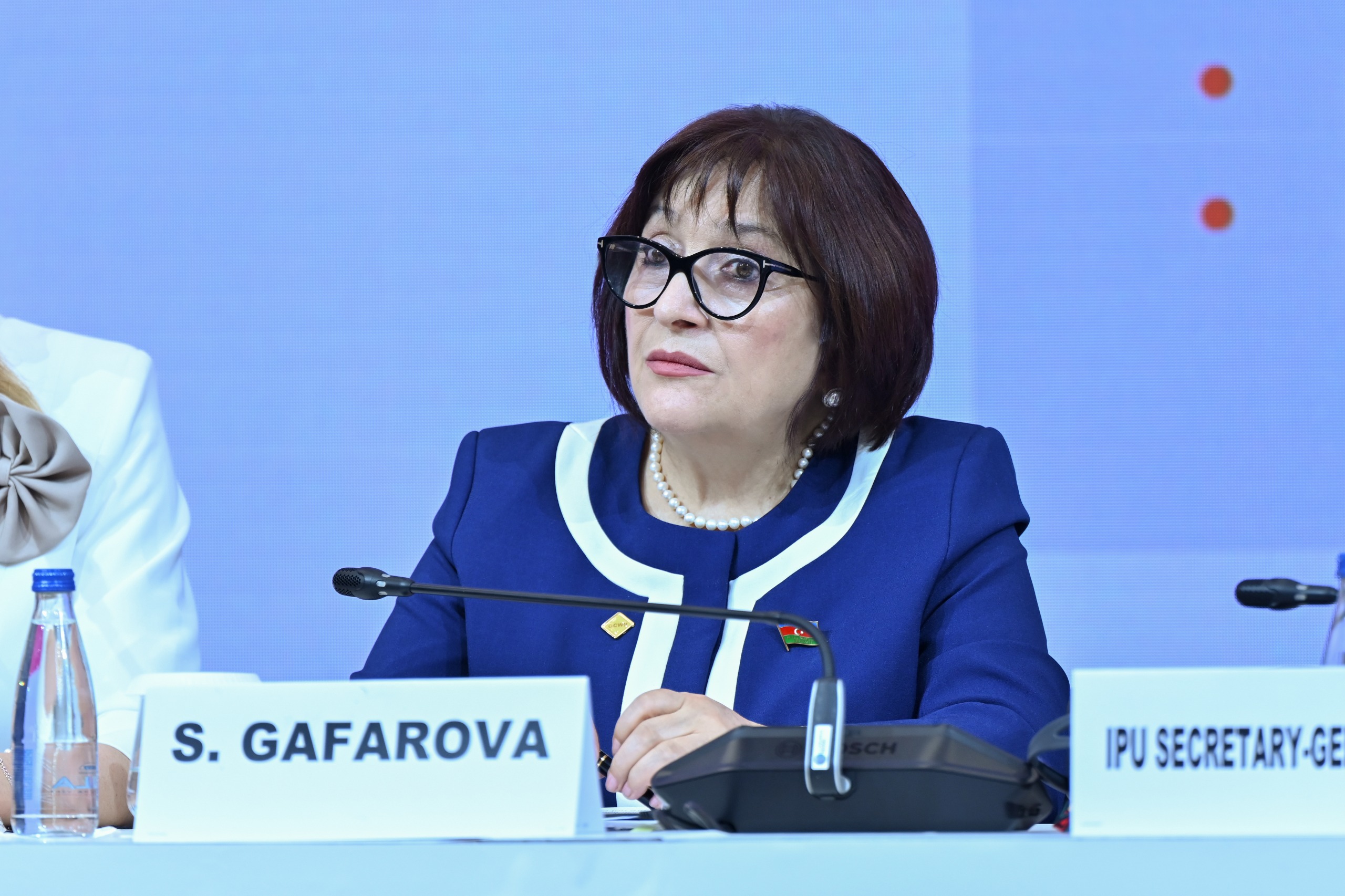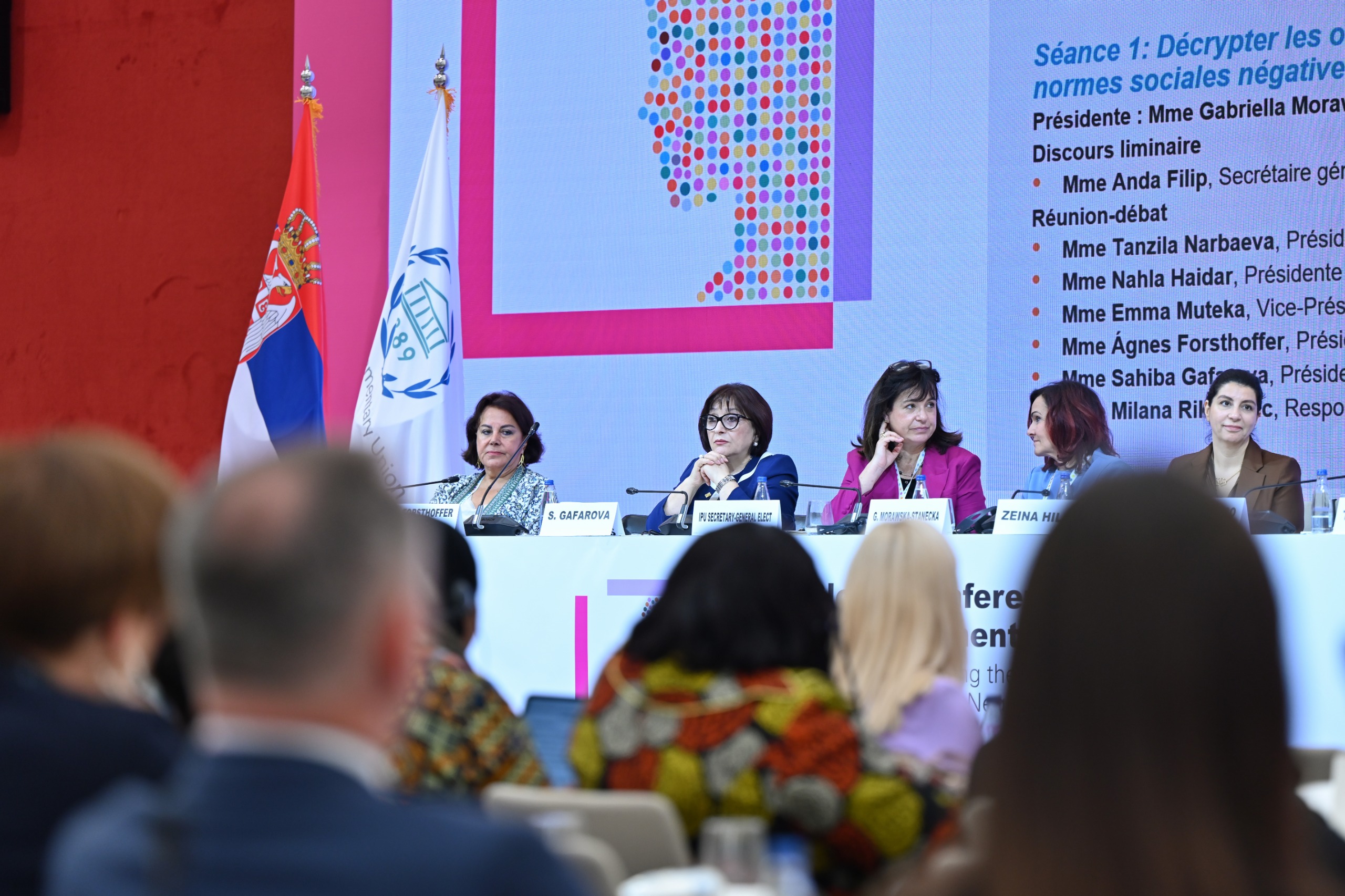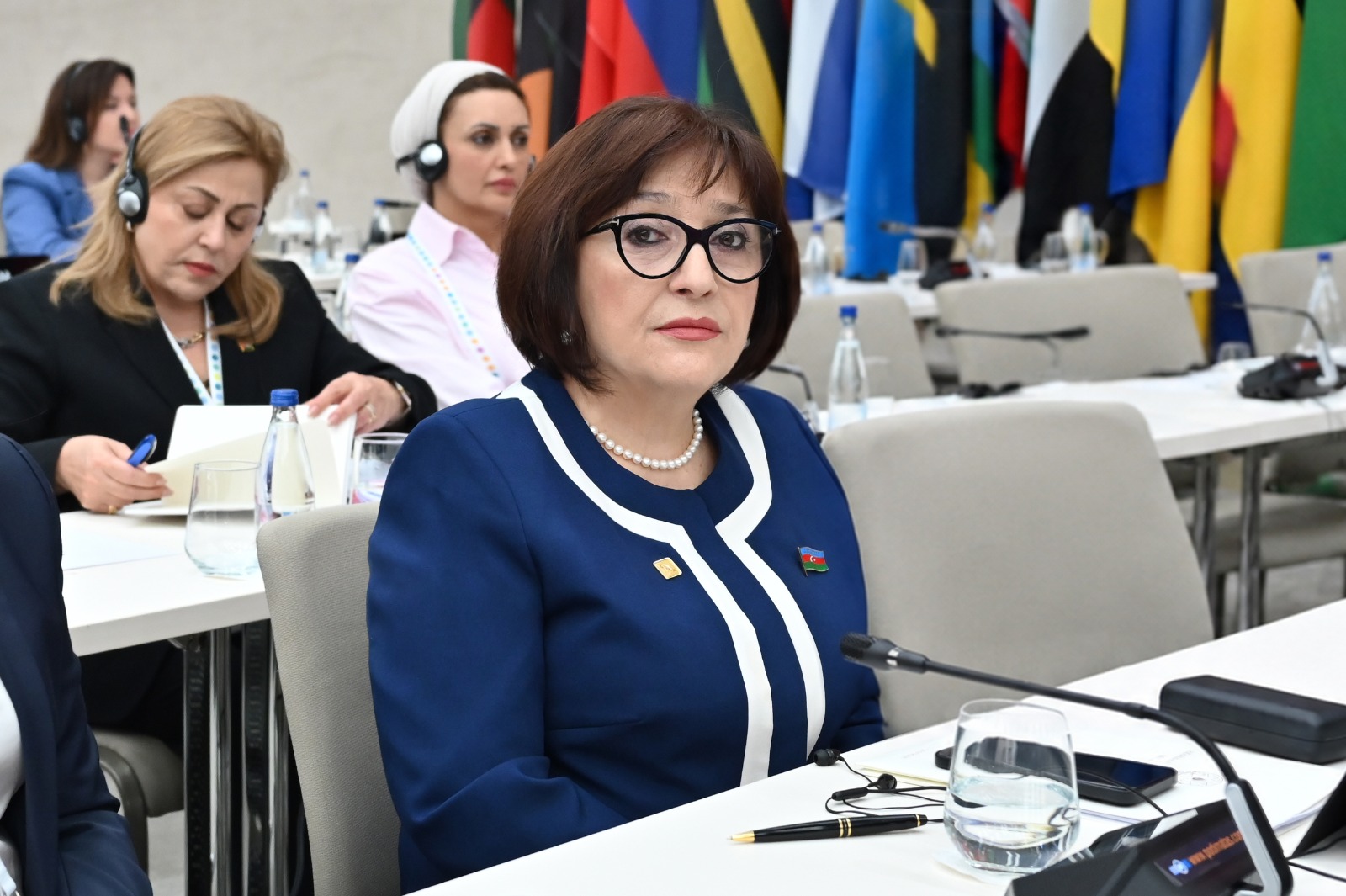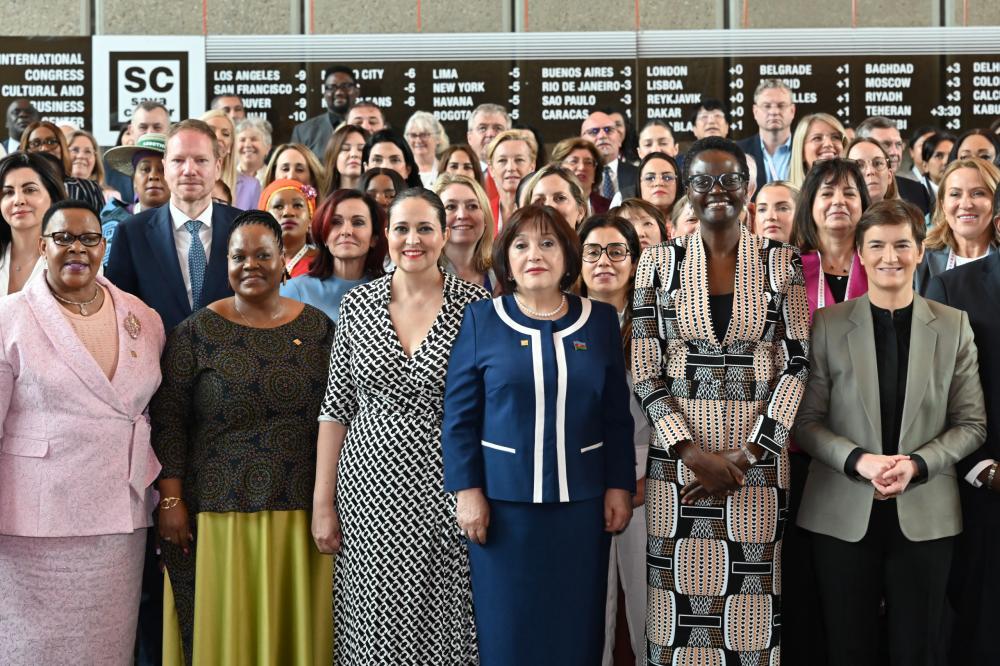


Speaker of Milli Majlis Sahiba Gafarova addresses the Global Conference of Women Parliamentarians in Belgrade
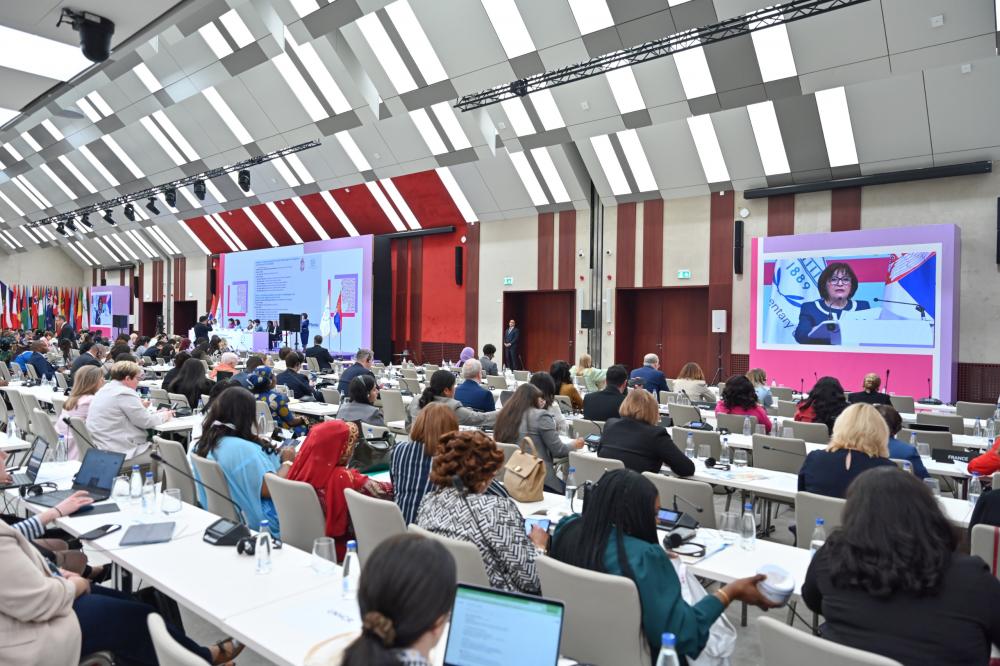
Speaker of the Milli Majlis Sahiba Gafarova delivered a speech at the Global Conference of Women Parliamentarians of the Inter-Parliamentary Union that was held in the capital city of Serbia Belgrade on 2 June. In her speech ‘Advancing Parity: Overcoming Barriers Created by Gender Stereotypes and Negative Social Norms’, Speaker Sahiba Gafarova emphasised that such events demonstrate with stark clarity the importance of international co-operation – the significance of exchanges of opinions and advanced experience – and pointed at the problems discussed today not being limited to one country or one region alone.
The Speaker of the Milli Majlis mentioned a number of tremendous achievements secured to date but added also that there are still the problems that must be eliminated. She said that stereotypes and social norms restraining women’s personal development constituted the most complex of those problems.
Every society has its traditions as well as cultural and social values, it was observed. Regrettably, negative stereotypes and social norms are deeply rooted in many places, though.
It was remarked in the speech that no-one denied men and women being different. That, however, does not lead to a notion of their inequality. The reality is such as that empowerment of women is already regarded as one of the priority vectors of sustainable development and of building stronger societies and institutions. According to Speaker Sahiba Gafarova, it is quite simply not a viable approach to ignore the rights and potential of the people constituting the half of society. Members of Parliament, too, carry the shared responsibility for building societies wherein every woman and every girl would be able to realise their potentials in entirety, free of discrimination and without hurdles. Parliaments, amongst others, ought to reflect social demands and existing dynamics as well.
The Speaker of the Milli Majlis said that we as Members of Parliament take legislation as the most essential means. At the same time, however, we comprehend that legislation alone cannot ensure the desired results are achieved. A more systemic and comprehensive attitude is therefore required, one which would be based on an approach encompassing society as a whole.
The Speaker of the Azerbaijani Parliament drew the assembly’s attention to the necessity to modify societal mindset, first and foremost, so that stereotypes and social norms could be altered. The approaches rejecting gender equality should be eliminated whereas societies should be promoted to accept the equality of women and men as a staple value.
Sahiba Gafarova said that promotion of the gender equality values by means of cultural initiatives and enhancing the relevant awareness using the media were efficient methods. But, as a person with long years of academic work experience, she declared her profound belief in the power of education in changing conduct. She underlined the relevant importance of special attention being given to education, enlightenment and involving youth in this process. It was also remarked in the speech that not only does education changes mindsets but it also annihilates barriers obstructing empowerment of women in politics, economy and other fields.
In her address, the Speaker of the Milli Majlis talked about the gender equality work done in Azerbaijan and the increased representation of women in all the walks of life. According to her, the present-day notions of gender equality entertained in our society really reflect our national traditions that date back over a very long time. To wit, Azerbaijani women have historically been viewed as equal partners to society and have borne decisive influences on its development. Azerbaijan was one of the first countries in the world and the first one in the Islamic East to grant women the suffrage with the establishment in 1918 of the Azerbaijan Democratic Republic, the first parliamentary republic of the Islamic East. According to Speaker Sahiba Gafarova, that historic solution was made earlier than women’s equal political rights were recognised in a number of European countries. That means, then, that the principles of equality, inclusivity and democratic representation have originally been integral parts of the political culture of Azerbaijan.
She said that those traditions of gender equality were continued consistently with Azerbaijan regaining her independence in 1991 and have become one of the key priorities of the state policy. It was observed that the equality of women and men is stipulated in the Constitution of the Republic of Azerbaijan whereas the Law ‘On Guarantees of Gender Equality (of Men and Women)’ passed in 2006 formed the corresponding legal framework. Furthermore, it was said that the inception of the State Committee for Women’s Problems in 1998 was one of the important steps towards forming the institutional foundation of gender policy.
The Speaker of the Milli Majlis high-lit the fact that vastly important measures had been implemented in Azerbaijan under the leadership of President Ilham Aliyev to combat household violence, eradicate discrimination, enhance women’s education and employment opportunities and empower women. The decrees, national action plans and state programmes signed by the President have ensured that an integrated and comprehensive approach would be formed which has ensured advances in women empowerment.
Referring to the statistical data, the Speaker of the Milli Majlis let it be known that women account for approximately 49 per cent of the employed population of Azerbaijan at present. Women’s representation in local self-government bodies, too, has grown remarkably – from 4 per cent in 2004 to about 39 per cent. Some 30 per cent of civil servants are female. It was further noted that women judges, law enforcement officers and lawyers have grown in numbers in our country over the past years. Women are successful holding governing positions in state departments, diplomatic service, education and public administration.
Turning to women’s representation in the Milli Majlis, Speaker Sahiba Gafarova mentioned 26 out of the 125 MPs being women pursuant to the parliamentary elections held in September 2024. This represents an increase to approximately 21 per cent as against 11 per cent in 2005. There are women MPs serving as deputy chairwomen of 5 out of the 15 parliamentary committees. Whereas, the Committee for Family, Women’s and Children’s Issues is headed by a woman MP. It was then remarked also that the women MPs’ representation on all the parliamentary committees does, one could safely say, ensure that their views and stances are taken into account within the legislative practice.
The Speaker of the Azerbaijani Parliament underscored the importance of the results achieved and stressed the need to continue the endeavours to attain a complete gender equality. As she put it, the sustained nature of the results achieved in Azerbaijan is an important point as is the fact that those results relate the consistent gender equality policy of our State.
The conference participants were made aware of Azerbaijan having passed the National Action Plan for gender equality for 2026-2028 at the end of last year. The document contains a number of progressive initiatives aiming to enhance social awareness of gender equality matters as well as to promote women’s and men’s equal participation in decision-making in the public and private sectors.
The Speaker of the Milli Majlis reiterated in the conclusion of her address that the current global situation accentuates the importance of continuing consistent moves to eliminate the deeply-rooted stereotypes and adverse social norms. A continued strengthening of the legislative frameworks and institutional mechanisms as well as societal enlightenment are of special importance.
The Press and Public Relations Department
The Milli Majlis