


Speaker of Milli Majlis Sahiba Gafarova Addresses 151st Assembly of Inter-Parliamentary Union
_1760968556.jpeg)
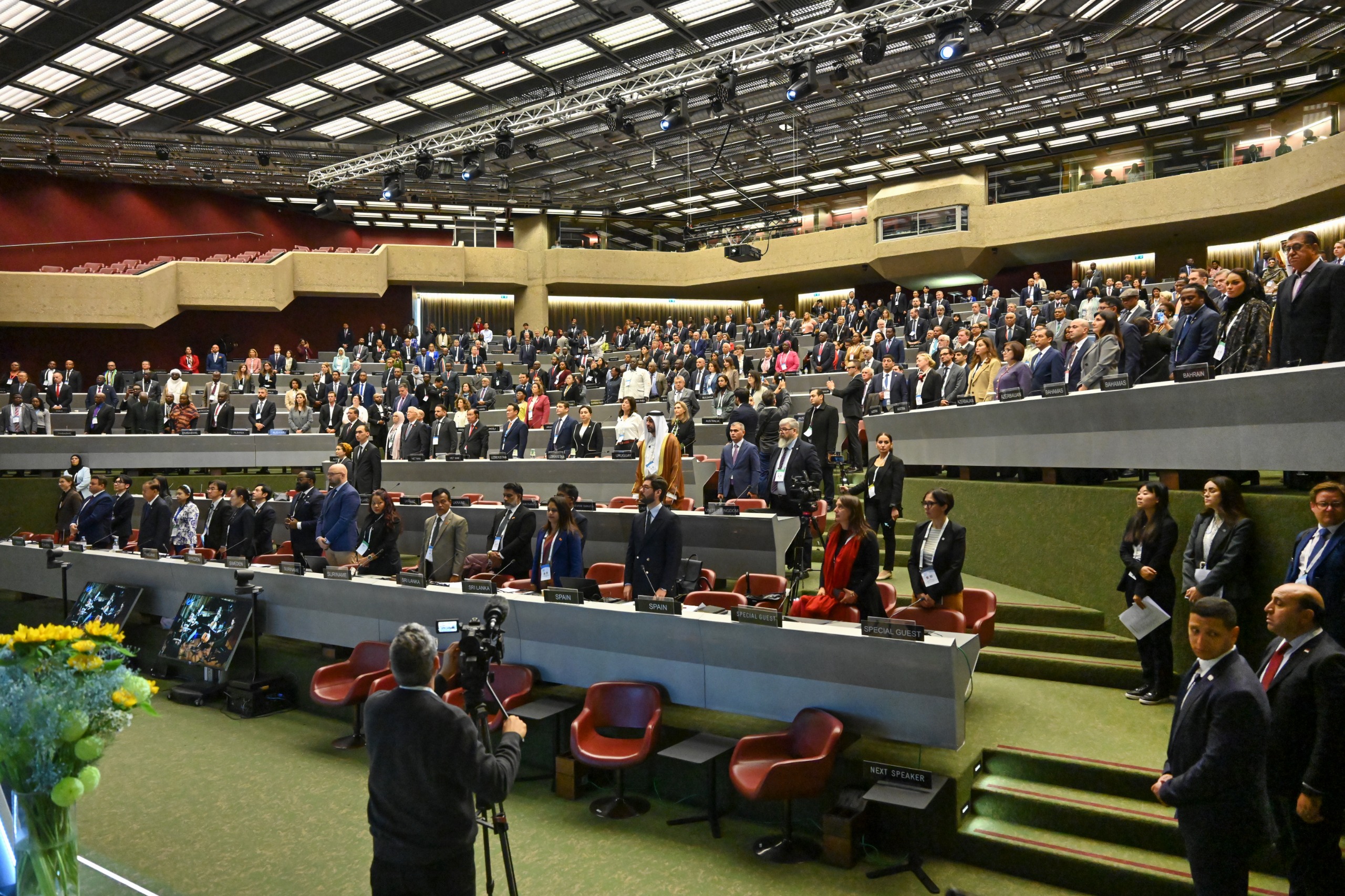
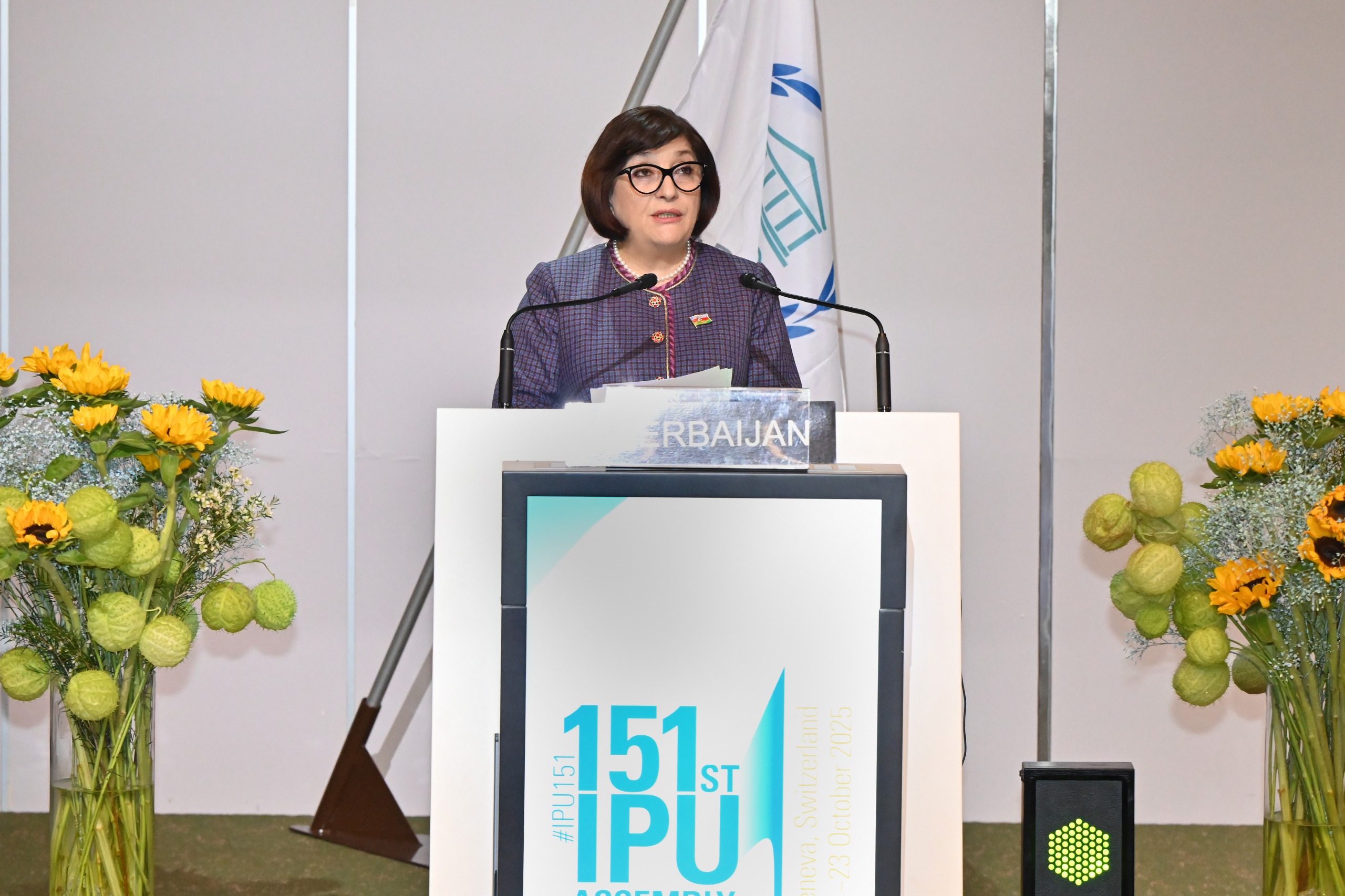
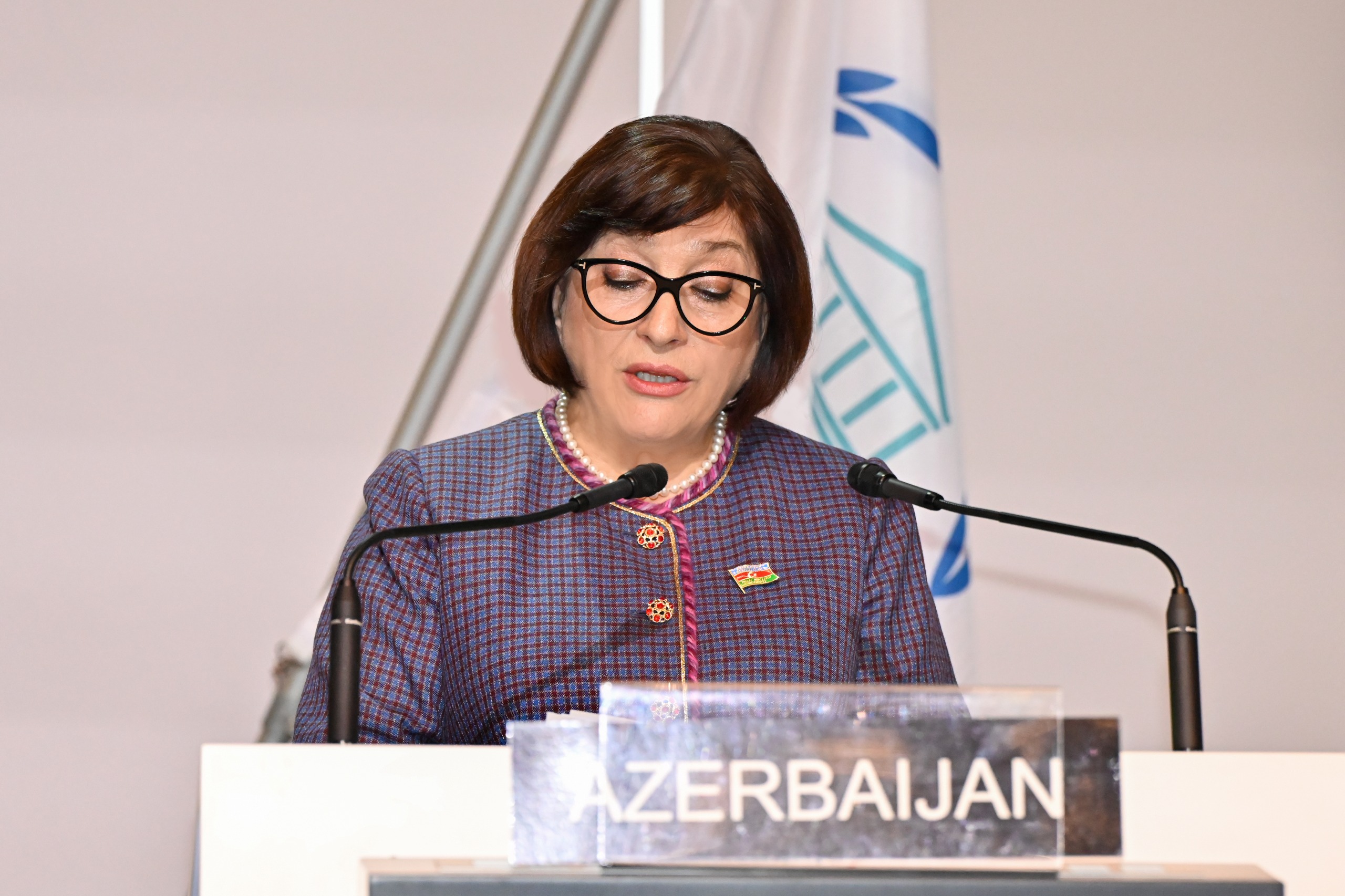
Speaker of the Milli Majlis Sahiba Gafarova delivered a speech at the discussion themed ‘Protecting humanitarian norms and supporting humanitarian action in times of crisis’ in the format of the 151st Assembly of the Inter-Parliamentary Union (IPU) in the city of Geneva of Switzerland on 20th October.
Speaker Sahiba Gafarova remarked in her address that conflicts and natural disasters continues growing in number worldwide today and that this entails new humanitarian problems – violence, displacement, crises and famine. Recalling the recent warning by the Secretary General of the United Nations about global humanitarian action being on the brink of collapse, the Speaker of the Milli Majlis said this clearly shows how serious the situation is and how necessary joint measures are.
Whilst telling the event participants about the signing of the Joint Declaration by Azerbaijan and Armenia in Washington, D.C. in August of this year, Speaker Sahiba Gafarova mentioned the initialling by the parties of the peace treaty as well, which is a historic step on the path to ending the decades-long Armenian-Azerbaijani conflict. The Speaker of the Milli Majlis expressed the hope that that momentous event will turn a new page of lasting peace, stability and sustainable development in the South Caucasus. This, in turn, instils the confidence that even protracted conflicts can be resolved by way of dialogue and political will.
As Speaker Sahiba Gafarova informed the participants of the discussions, the Azerbaijani people learned from their own experience what a humanitarian crisis means. According to her, back in the early 1990s, approximately one million Azerbaijanis became refugees and internally displaced persons consequent to the Armenian-Azerbaijani conflict. For an eight-million-strong people at that time, that was an enormous tragedy. Thanks to sustained national efforts and the support of international partners, however, Azerbaijan was able to meet the urgent needs of the displaced population. On restoring her territorial integrity in 2020, our country began large-scale reconstruction and rehabilitation projects in the territories liberated from occupation. The Speaker of the Milli Majlis remarked that the return process has already begun with over fifty thousand people living, working and studying there once again now. This is proof of our country's strong political will and its commitment to humanitarian action under the leadership of the President of Azerbaijan Ilham Aliyev.
Some serious problems persist still, though, Sahiba Gafarova added. She pointed up amongst them, and as one of the most pressing matters, the mine pollution of our lands which continues threatening human lives and hampering the restoration work. The Speaker said that a huge quantity of mines were planted by Armenia during the occupation years in the previously occupied territories of Azerbaijan. It was emphasised that more than 400 Azerbaijanis have been killed or wounded by the mines from 2020 to the present. Those mines and explosive remnants of war also cause serious damage to the environment in that they pollute soil and water, destroy biodiversity and prevent the cultivation of fertile lands.
The Speaker of the Milli Majlis drew the assembly’s attention to that humanitarian de-mining is not only a security measure but also an environmental restoration act for our country.
As Speaker Sahiba Gafarova emphasised in her address, sustainable development and the ‘green principles’ are integrated into every stage of development in the implementation of reconstruction and rehabilitation works in the de-occupied territories of Azerbaijan. According to her, new ‘smart villages’ and ‘green energy zones’ are being created in these territories in order to ensure that reconstruction is carried out in parallel with environmental renewal. As she said, humanitarian reconstruction and ecological balance must develop together.
The Speaker of the Milli Majlis high-lit at the assembly another humanitarian challenge – the issue of the fate of missing persons. She emphasised that nearly 4,000 Azerbaijanis went missing during the years of conflict and that their families are still awaiting answers. This is not only a national ache but also a universal humanitarian concern shared by many countries.
The Speaker reiterated that Azerbaijan, aiming to support this struggle, has adopted humanitarian mine action as its 18th National Sustainable Development Goal and urges other countries to follow suit. Furthermore, Azerbaijan organises international conferences on humanitarian demining and has established the ‘Baku Dialogue on Missing Persons,’ which provides a valuable platform for the exchange of ideas and best practices.
The Speaker of the Milli Majlis stated in conclusion that Azerbaijan, once a recipient of humanitarian aid herself, now acts as a donor country supporting the UN and global humanitarian efforts. During the COVID-19 pandemic, Azerbaijan extended assistance to more than 80 countries and, over the past five years, she has delivered humanitarian, financial, and technical aid totalling at more than 350 million US dollars to over 140 countries. Through these efforts, Azerbaijan demonstrates the inseparability of peace, humanitarian activity and environmental sustainability. It is only through solidarity and shared responsibility that we can build a safer, greener and more humane future for all.
The Press and Public Relations Department
The Milli Majlis
_1760968619.jpeg "Speaker of Milli Majlis Sahiba Gafarova Addresses 151st Assembly of Inter-Parliamentary Union")
_1760968620.jpeg "Speaker of Milli Majlis Sahiba Gafarova Addresses 151st Assembly of Inter-Parliamentary Union")
_1760968620.jpeg "Speaker of Milli Majlis Sahiba Gafarova Addresses 151st Assembly of Inter-Parliamentary Union")
_1760968620.jpeg "Speaker of Milli Majlis Sahiba Gafarova Addresses 151st Assembly of Inter-Parliamentary Union")
_1760968620.jpeg "Speaker of Milli Majlis Sahiba Gafarova Addresses 151st Assembly of Inter-Parliamentary Union")
_1760968620.jpeg "Speaker of Milli Majlis Sahiba Gafarova Addresses 151st Assembly of Inter-Parliamentary Union")
