


The attitude of the Milli Majlis of the Republic of Azerbaijan to the Resolution of the European Parliament dated 8 October 2026
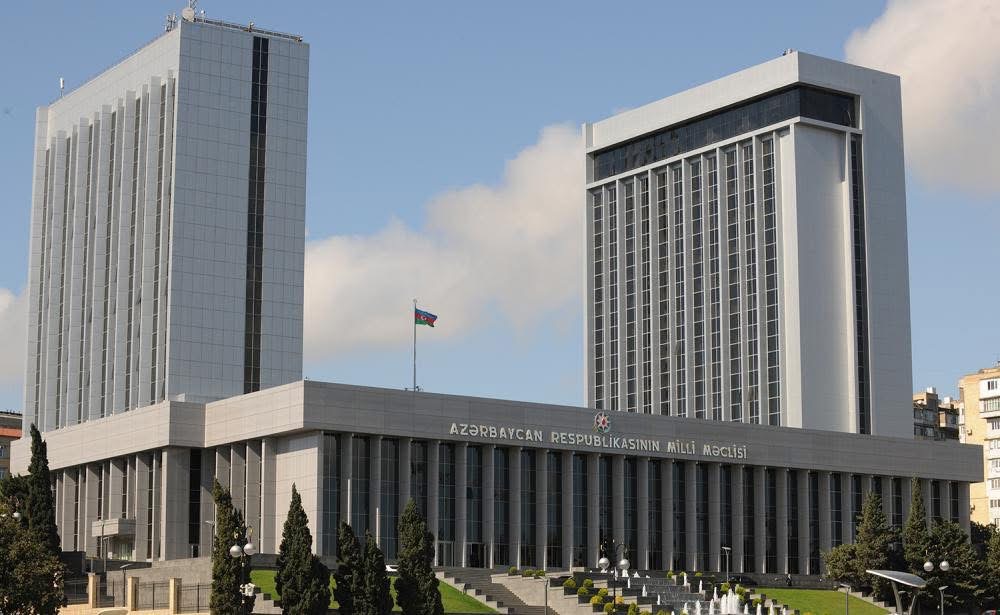
The Milli Majlis of the Republic of Azerbaijan views the adoption by the European Parliament on 8 October 2026 of a resolution on the question of human rights and liberties in Azerbaijan, one far removed from objectivity, as a biased political action and firmly rejects the unfounded accusations constructed on false and fictitious information. It should be mentioned particularly in this connection that the deliberate political line pursued by the European Parliament against Azerbaijan acquired a yet more hostile nature following the 2nd Garabagh War. The numerous resolutions which this organisation has adopted in the past years as well as the attempts it has made to put political pressure on our country and its calls for application of sanctions should be regarded as the European Parliament’s refusal to recognise the new geopolitical reality established in the South Caucasus following the historic victory of Azerbaijan.
On the other hand, it is astonishing that the European Parliament will not abandon the attempts to act as a supranational judge entitled to determine the scope of powers of a sovereign country’s state authorities, as well as to instruct her law enforcement and judicial bodies and set political conditions for bilateral relations. This manner of conduct calls into question gravely the objectivity in the approaches of the European Parliament whilst signifying its unpreparedness to build the relations with Azerbaijan along the principles of legal equality, mutual respect and non-interference in internal affairs.
All this demonstrates the dominance of the Azerbaijanophobic, Turkophobic and Islamophobic sentiments in the organisation. That a number of MEPs would advance the interests of lobbyist groups rather than their European electors’ bears witness to their racist and chauvinistic position. The authors of the resolution are even willing to jeopardise the policy of the European Union in the South Caucasus for the sake of achieving their unseemly political goals.
Serious issues also arise due to the current situation in the European Parliament itself. The last years’ resounding corruption investigations, including into bribery of MEPs and unlawful influencing of political decision-making, have raised with this organisation the matters concerning its political reputation and undermining confidence in established parliamentary procedures.
The legitimate question which arises in this connection is how convincing can be the political and moral accusations and admonitions on the part of the organisation which has to respond to serious challenges concerning transparency, integrity and independence in decision-making. The European Parliament should demonstrate consistency in applying its own standards and establish dependable guarantees against corruption and unlawful lobbyism before it can put categorical demands to other states.
Equally serious questions arise from the biased attitude of the European Parliament to human rights problems. Whilst resolutions are adopted, unequivocal demands are put forth and calls for sanctions are made regarding Azerbaijan, numerous problems persist in the European countries themselves which have to do with law enforcement authorities using excessive force, restrictions on the freedom of peaceful assembly and ensuring accountability for offences committed.
The scale of those problems is confirmed by the reports of international rights organisations as well. For instance, cases of excessive police force used during demonstrations have been documented in a number of European countries.
The Milli Majlis of the Republic of Azerbaijan believes that the European Parliament should pay more attention to the problems of protecting the fundamental rights and freedoms in the European Union Member States, including to the issues of police violence, ensuring the freedom of free assembly and officials’ accountability for unlawful acts. The universality of rights defence standards presupposes, first and foremost, their consistent and impartial application without permitting political selectivity and double standards.
Another alarming moment is that the aforementioned resolution of the European Parliament is adopted in a period when the peace agenda is promoted between Azerbaijan and Armenia, under the conditions where political responsibility and support for constructive dialogue are especially important. Evidently, such one-sided initiatives and erroneous opinions make building an atmosphere of mutual trust more difficult and pose added obstacles to the normalisation of inter-state relations.
It is a cause of concern that whilst Azerbaijan and Armenia are making efforts to overcome the long years’ conflict, the destructive elements representing certain political forces within the European Parliament are again attempting to create a hotbed of political and military tensions. Real support for the process of attaining regional stability and sustainable peace requires respect for countries’ sovereignty and territorial wholeness, support for the direct dialogue and refrainment from actions liable to aggravate mutual distrust.
The discrepancy between the calls made by the European Parliament for restoration of co-operation with the Milli Majlis and the practice of adopting documents leading to acute inter-parliamentary discord should be emphasised as well. Restoring trust requires not declarative urges but a real change in approaches, abandonment of the confrontational rhetoric and recognition of the equal nature of interaction between the parliaments.
As for the unfounded claims contained in the resolution, Azerbaijan is ever committed to the position of protecting human rights and fundamental freedoms, ensuring the rule of law and consistent implementation of the principles of a rule-of-law state. The establishment and free operation of democratic institutions in our country, the formation of the main components of a civil society and other factors demonstrate the resolve and will of the Azerbaijani State to progress along the path of democratic development.
It is regrettable, too, that the European Parliament, whilst putting forwarded unfounded accusations against Azerbaijan in connection with protection of human rights and freedoms, preferred to remain invariably silent during the occupation of the Azerbaijani lands by Armenia about the rights of the more than 1 million Azerbaijani refugees and IDP who had been driven from their native parts, subjected to ethnic cleansing and genocidal acts, and who had had their rights and freedoms taken away from them.
There is another aspect to this matter: it is unclear what logic underpins the fact that the persons convicted pursuant to judicial decisions for having committed concrete crimes are referred to as ‘political prisoners’ or unconditional release is demanded for those who are charged with solid grounds and under appropriate criminal articles with the suspected commitment of similar acts. No party, be it a person or an organisation, has the right to claim that people’s standing in a society entitles them to immunity from prosecution.
The European Parliament should not only reflect on the political consequences of the decisions is makes but also on the responsibility to the millions of citizens of the European countries who have put their confidence in them. The citizens of the European countries are in their right to expect not initiatives stemming from biased political considerations but objectivity, a principled attitude and commitment to democratic values from their elected representatives.
The Milli Majlis of the Republic of Azerbaijan urges the European Parliament to cease the confrontational rhetoric with regards to our country and not to interfere in the internal affairs of our state. Simultaneously, the Parliament of Azerbaijan declares that no force can force Azerbaijan to step off the path of democratic development.
